Choosing the right components for your machinery can decide whether a system runs smoothly for years or suffers from costly downtime. A dependable linear electric actuator manufacturer affects performance, safety, and long-term operating costs. In this guide, Rapid Controls explains what separates a trustworthy supplier from an average one and how to choose with confidence.
Understanding Linear Electric Actuators and Their Working Principles
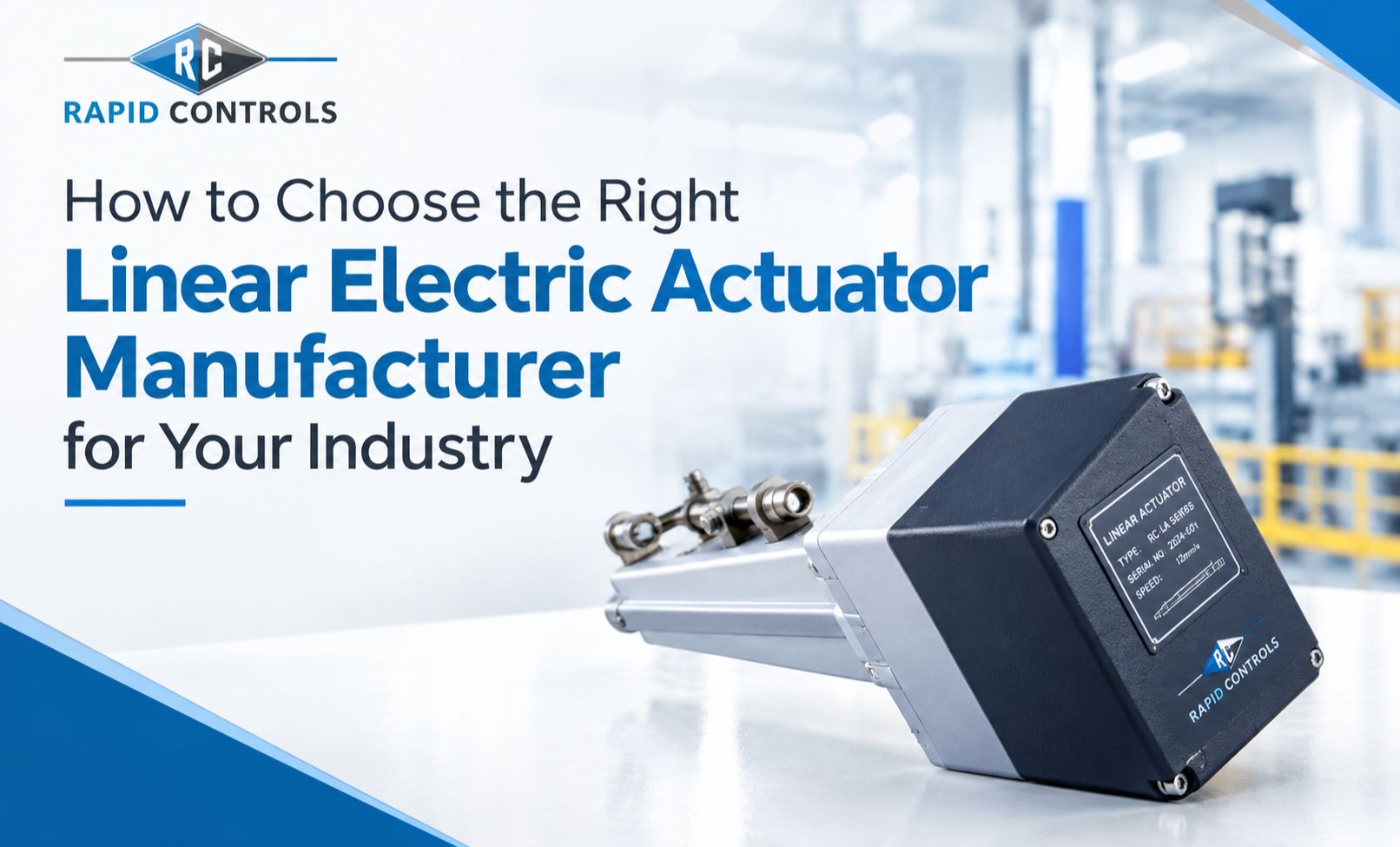
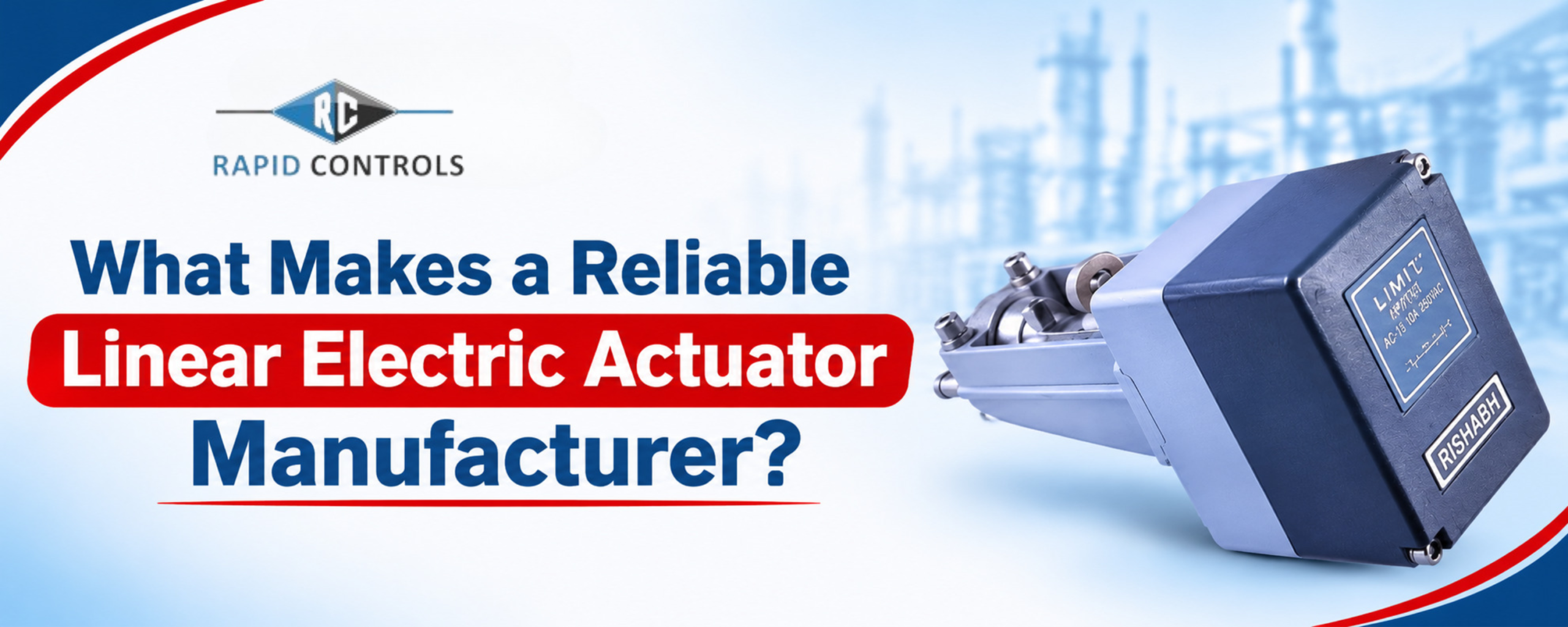
A linear electric actuator converts an electric motor’s rotary motion into straight-line movement. It is used wherever pushing, pulling, lifting, tilting, or positioning is required.
The principle is simple. A motor drives a lead screw or ball screw, and a nut travels along it to move a rod or carriage. Limit switches or position sensors provide feedback, so the system always knows the exact position.
Compared with hydraulic and pneumatic systems, an electric linear actuator offers cleaner operation, precise control, and lower maintenance. It also integrates easily with PLCs and building automation systems. There are no oil leaks, compressors, or piping to manage, which suits modern, energy-conscious facilities. A practical example is our Linear Electric Actuators (RC981-J Series).
Key Features of a High-Quality Linear Electric Actuator
When comparing products from any linear actuator manufacturer, look for these characteristics:
- Thrust and load capacity: The unit should handle your load with a safety margin.
- Stroke length options: Flexible strokes let one design fit multiple applications.
- Speed and duty cycle: Performance should stay consistent without overheating.
- Positioning accuracy: Feedback options ensure repeatable, precise motion.
- Ingress protection: Dust and water resistance matter in harsh environments.
- Smooth, quiet operation: This is a sign of good engineering.
- Customization: Voltage, mounting, and control signals should be adaptable.
A reliable manufacturer documents these specifications clearly and backs them with test data.
Importance of Material Quality and Manufacturing Standards
An actuator’s lifespan depends on its materials and build quality. Quality manufacturers use hardened screws, corrosion-resistant housings, durable bearings, and effective sealing. These resist wear, heat, and environmental stress.
Manufacturing discipline matters just as much. Precision machining, documented quality processes, and pre-dispatch testing, such as load and endurance checks, ensure every unit performs as promised. Consistent tolerances across batches mean the unit you receive next year performs like the one you tested today.
Rapid Controls has been manufacturing since 1973, and that experience shapes how we approach quality across our full range of electric actuators.
Benefits of Choosing an Experienced Linear Electric Actuator Manufacturer
An experienced electric linear actuator manufacturer offers advantages beyond the product itself:
- Proven reliability: Years of field feedback help refine designs and remove weak points.
- Engineering support: Knowledgeable teams help you size and configure the right unit, reducing trial and error.
- Customization and OEM capability: Strokes, voltages, and control options can be tailored to your needs.
- Consistent supply: Strong processes support on-time delivery and stable quality.
- After-sales service: Warranty, spare parts, and technical help protect your investment.
Many projects also need more than one actuator type. A supplier with a broad range, including compact electric actuators and high torque electric actuators, lets you source from one trusted partner.
Industrial Applications of Linear Electric Actuators
The industrial linear actuator is valuable across many sectors:
- Manufacturing and automation: Assembly lines, clamping, pressing, and sorting.
- HVAC and building services: Damper and valve control for efficient climate systems.
- Material handling: Lifting platforms, conveyor gates, and diverters.
- Packaging machinery: Repeatable motion for filling, sealing, and labeling.
- Medical and laboratory equipment: Smooth, quiet movement in adjustable and diagnostic devices.
- Agriculture and heavy equipment: Reliable operation of hatches and implements in rugged conditions.
- Renewable energy: Solar tracker adjustment to maximize energy capture.
Wherever accurate, controlled movement is needed, an electric linear actuator is a clean and efficient solution.
Factors to Consider When Selecting the Right Linear Electric Actuator Manufacturer
Look beyond price when choosing a supplier. Keep these factors in mind:
- Technical expertise: Can they advise on your specific application?
- Product range: A wide portfolio suggests they can meet varied load, speed, and environmental needs.
- Quality assurance: Look for documented testing and consistent production standards.
- Customization options: Check whether they can tailor products to your specifications.
- Lead times: Dependable delivery keeps projects on schedule.
- Warranty and support: Strong after-sales service reflects confidence in the product.
- Reputation: Long-term client relationships and references are strong trust signals.
- Total cost of ownership: A slightly higher upfront cost often pays off through lower maintenance and longer service life.
Conclusion
A reliable linear electric actuator manufacturer provides engineering insight, durable materials, consistent quality, and dependable support throughout the product’s life. By understanding how actuators work and evaluating suppliers carefully, you can protect your equipment and improve operational efficiency.
Looking for dependable actuator solutions? Rapid Controls is ready to help. Contact our team today to discuss your requirements.
Frequently Asked Questions (FAQs)
1. What is a linear electric actuator?
A linear electric actuator is a device that converts the rotary motion of an electric motor into straight-line movement. It uses a lead screw or ball screw to push, pull, lift, or position loads with precision. You can explore our Linear Electric Actuators (RC981-J Series) for reference.
2. How do I choose the right linear electric actuator manufacturer?
Look at technical expertise, product range, quality testing, customization options, delivery timelines, and after-sales support. An experienced linear electric actuator manufacturer will also help you size and select the right unit for your application.
3. What is the difference between an electric linear actuator and a hydraulic or pneumatic actuator?
An electric linear actuator runs on electric power, so it needs no oil, compressor, or piping. It offers cleaner operation, more precise control, easier integration with PLCs, and lower maintenance than hydraulic or pneumatic systems.
4. Where is an industrial linear actuator commonly used?
An industrial linear actuator is used in manufacturing and automation, HVAC and building services, material handling, packaging machinery, medical equipment, agriculture, and renewable energy systems such as solar trackers.
5. What should I check before buying from a linear actuator manufacturer?
Check the load capacity, stroke length, speed, duty cycle, positioning accuracy, IP rating, and voltage options. Also confirm the warranty terms and spare parts availability.