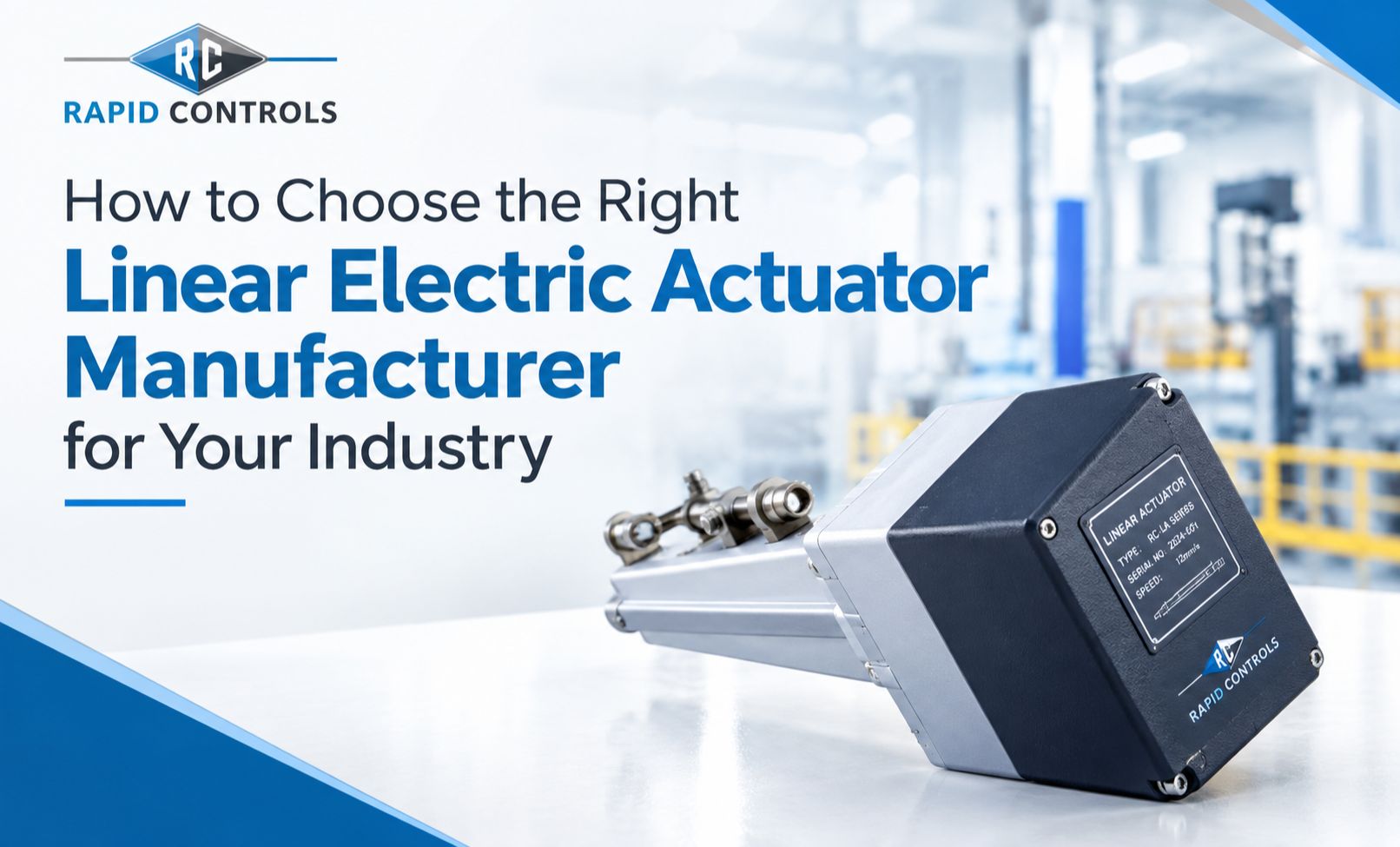
Choosing a manufacturing partner for motion control components isn’t a decision you want to rush. Whether you’re upgrading equipment, designing a new production line, or replacing outdated hydraulic systems, the actuator supplier you select will affect your operations for years. Working with an experienced Partnering with a reliable Electric Linear Actuator Manufacturer such as Rapid Controls often determines whether you achieve smooth integration or a costly retrofit down the road. This guide walks through what actually matters when narrowing down your options.
Start With Industry-Specific Experience
Not every actuator manufacturer understands the demands of every industry. A supplier that primarily serves packaging equipment may not grasp the sealing requirements of food processing, and a company focused on medical devices might not have the ruggedized options needed for outdoor agricultural machinery. Ask potential manufacturers directly about the industries they’ve supplied, and request references or case studies relevant to your application. An Electric Linear Actuator Manufacturer with a track record in your field will already understand your regulatory requirements, duty cycles, and environmental conditions, which saves you from having to explain the basics from scratch.
Evaluate the Product Range and Customization Options
Standard, off-the-shelf actuators work fine for many applications, but plenty of projects need something tailored. Look at whether the company offers a range of stroke lengths, force ratings, speeds, and mounting configurations, and whether they can build something custom when a standard unit won’t cut it. Rapid Controls, for example, works with customers to match actuator and motorized valve specifications to the exact application rather than pushing a one-size-fits-all product. A supplier with a narrow catalog and no flexibility may force you to compromise on performance just to make something fit.
Check Build Quality and Testing Standards
An actuator that fails in the field costs more than the part itself. Downtime, replacement labor, and potential damage to connected equipment all add up. Before committing to a manufacturer, ask about:
- Materials and construction methods used
- Whether each unit is tested before shipment
- Certifications their components carry
- Ingress protection ratings
- Load capacity and duty cycle ratings
A manufacturer that can answer these questions clearly and back them up with documentation is one you can trust to deliver consistent results, order after order.
Consider Technical Support and Engineering Assistance
Even well-designed actuators sometimes require guidance during selection, installation, or troubleshooting. A manufacturer that offers real engineering support, not just a sales team reading from a script, adds significant value. Ask whether they provide help with sizing calculations, wiring diagrams, or control integration. Find out how they handle warranty claims and technical questions after the sale. Suppliers who stay involved after the purchase tend to be the ones worth building a long-term relationship with, especially if you plan to order components regularly or scale up production.
Look at Lead Times and Domestic Availability
Supply chain disruptions in recent years have made lead time a bigger factor than it used to be. An Electric Linear Actuator Supplier with inventory on hand or a shorter production cycle can keep your project on schedule, while overseas suppliers with long shipping times can leave you waiting weeks for a part you needed yesterday. If you’re looking for a Linear Electric Actuator Manufacturer in India, working with a domestic supplier like Rapid Controls often means easier communication and faster problem resolution compared to sourcing overseas.
Compare Pricing Without Sacrificing Value
Price matters, but the cheapest option isn’t always the smartest choice. When comparing quotes, factor in:
- Expected lifespan of the actuator
- Maintenance frequency and cost
- What happens (and what it costs) if the unit fails prematurely
- What’s included in the quote, such as mounting hardware, wiring, or documentation
A slightly higher upfront cost from a manufacturer known for durable, reliable components often pays off compared to a budget option that needs replacing within a year or two.
Read Reviews and Ask for References
Finally, don’t skip the due diligence step. Before signing off on a supplier:
- Look up reviews and check industry forums
- Ask the manufacturer directly for references
- Reach out to companies with similar applications to yours
A supplier confident in their product quality won’t hesitate to connect you with existing customers. This step alone can reveal a lot about how a company handles communication, order accuracy, and support after the sale.
Final Thoughts
Selecting the right supplier takes some legwork, but it pays off in equipment that performs reliably for years. Weigh experience, product flexibility, build quality, support, lead times, and pricing together. When you’re ready to talk specifics, Rapid Controls, a trusted Linear Electric Actuator Manufacturer, can help you find the right actuator and walk you through the selection process from start to finish.
Frequently Asked Questions
1. What industries use linear electric actuators?
Packaging, food processing, medical equipment, agriculture, material handling, solar tracking, and industrial automation, among others. The right fit depends on load, environment, and duty cycle.
2. How do I know what size actuator I need?
Sizing depends on load weight, stroke length, speed, and mounting orientation. A manufacturer with engineering support, like Rapid Controls, can help you run these calculations.
3. Are electric actuators better than hydraulic or pneumatic ones?
It depends on the application. Electric actuators generally offer cleaner operation and lower maintenance than hydraulic systems, while pneumatic actuators are often faster but less precise.
4. Can actuators be customized for specific equipment, such as motorized valves?
Yes. Many manufacturers offer custom stroke lengths, force ratings, and mounting options for products like motorized valves and linear actuators alike.
5. How long do linear electric actuators typically last?
Lifespan varies by build quality and duty cycle, but a well-built actuator from a reputable manufacturer can last years with minimal maintenance.
6. Why choose a manufacturer based in India instead of sourcing overseas?
A domestic manufacturer like Rapid Controls typically offers shorter lead times and faster support, without the delays of international shipping and customs.