Every HVAC system depends on water reaching each coil, chiller, and terminal unit in the right quantity. When flow is uneven, some areas overcool while others struggle, energy bills climb, and equipment wears out early. A manual balancing valve fixes this, but its performance depends on who makes it. This guide explains how these valves work and what to look for in a manual balancing valve manufacturer in India, so you can specify with confidence.
What Is a Manual Balancing Valve and How Does It Work?
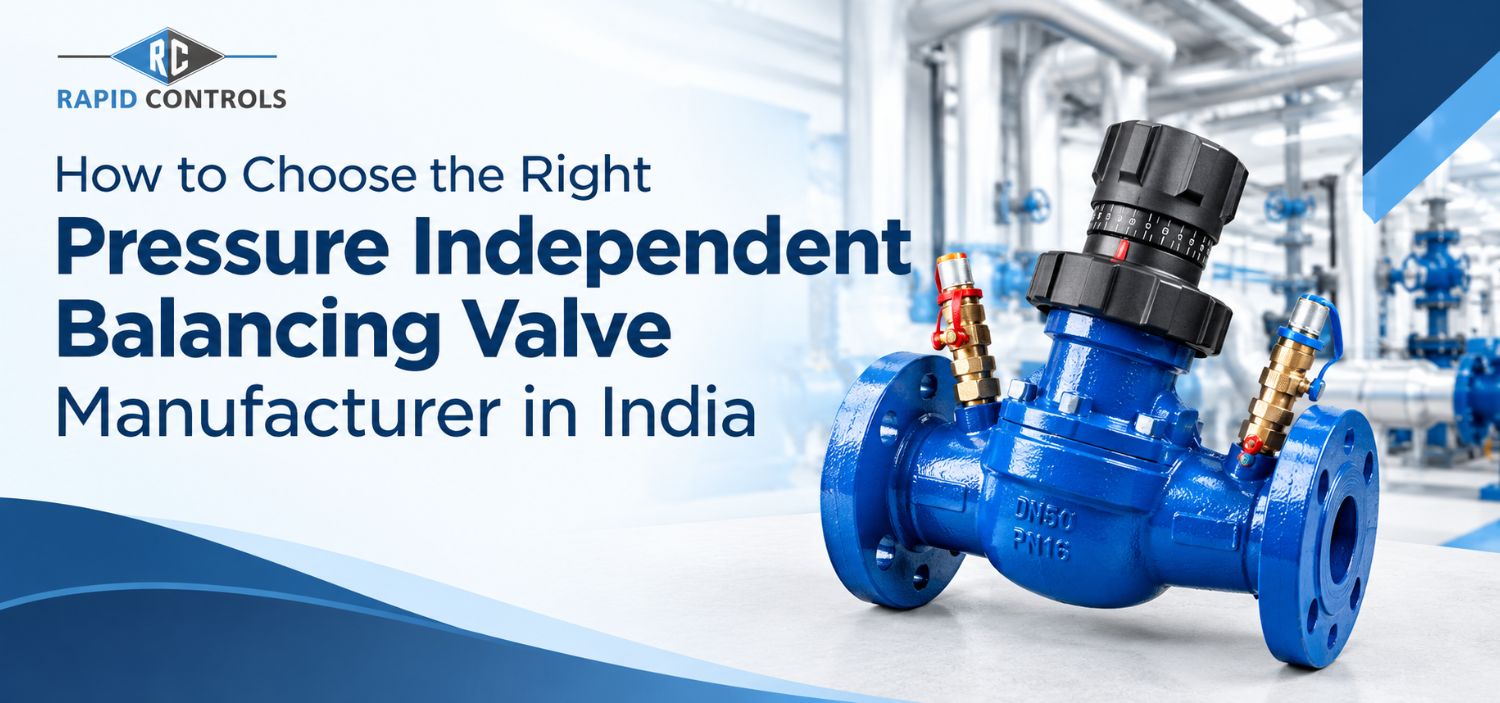
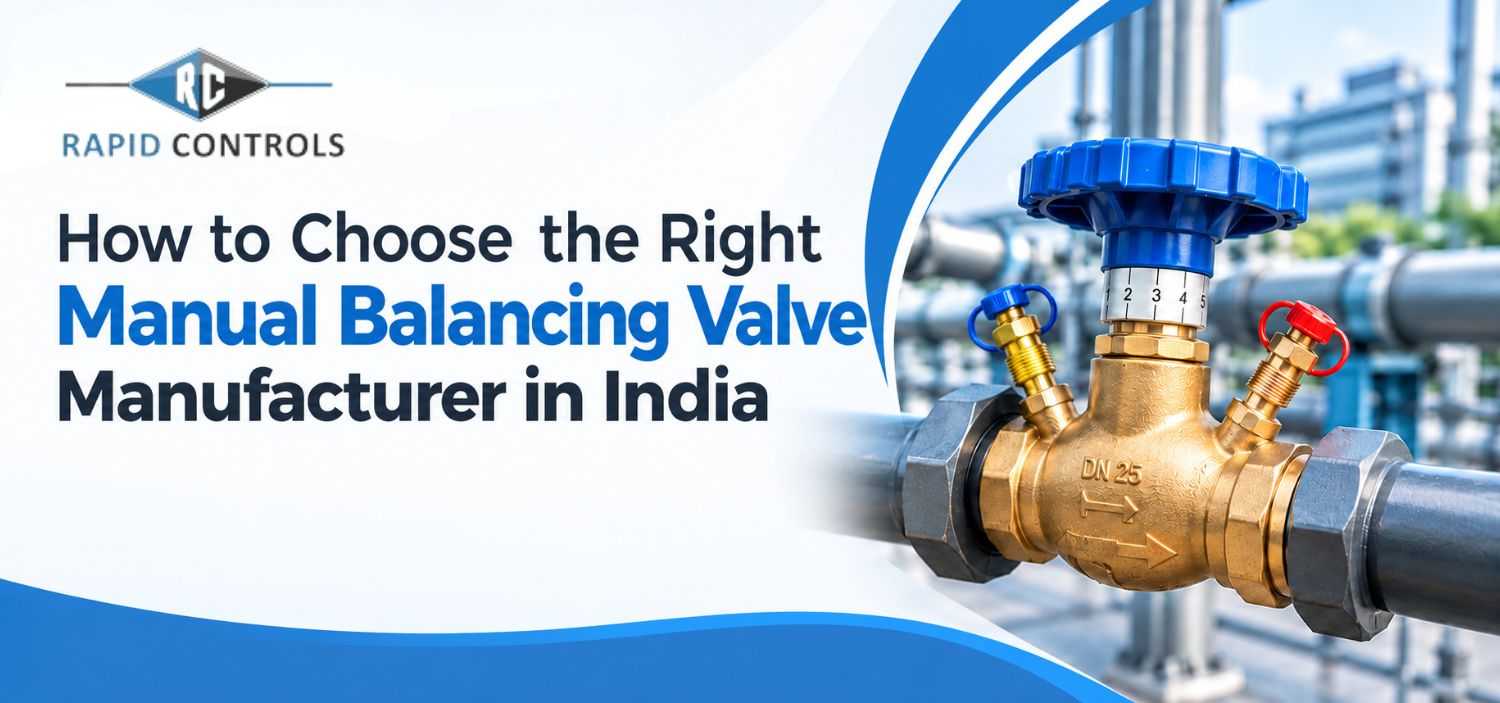
A manual balancing valve is a flow-control device installed in hydronic piping to set and maintain the correct flow rate through each branch or terminal unit. It has an adjustable orifice, a handwheel with a position indicator, and test ports on either side of the orifice.
Technicians connect a differential pressure meter to these ports and read the pressure drop across the valve. Using the valve’s flow characteristics, they calculate the actual flow and adjust the handwheel until it matches the design value. Once set, the position can be locked to prevent accidental changes. A manual flow balancing valve works this way in every circuit, so each part of the system gets its fair share of water.
Key Benefits of Manual Balancing Valves in HVAC Systems
A properly balanced system performs better in several ways:
- Energy efficiency: Balanced flow lets pumps and chillers run closer to their design points, reducing power consumption.
- Comfort: Each zone receives the intended heating or cooling capacity, removing hot and cold spots.
- Equipment life: Avoiding over-pumping and starved circuits reduces stress on pumps, coils, and chillers.
- Lower noise: Excess flow through terminal units often causes whistling and vibration. Balancing reduces it.
- Cost-effectiveness: Compared with automatic alternatives, manual valves cost less upfront and have few moving parts to fail.
A quality HVAC balancing valve is a small part of the budget, but it has an outsized effect on how the whole system performs.
Important Factors to Consider When Choosing a Manufacturer
Not every valve sold as a “balancing valve” performs equally. When evaluating a manufacturer or manual balancing valve supplier, look at:
- Measurement accuracy: The valve should give reliable, repeatable flow readings, with documented Kv/Cv values for each setting.
- Range of sizes and ratings: A good manufacturer offers a full range of sizes and pressure classes (such as PN16 and PN25) with threaded and flanged options.
- Testing and certifications: Ask for hydrostatic and leak-test records and compliance with relevant standards.
- Technical support: Sizing guidance, selection charts, and commissioning help save time on site.
- Consistency and delivery: Reliable lead times and batch-to-batch quality matter on large projects.
- After-sales service: Warranty terms and spare parts availability affect long-term ownership cost.
Common Applications of Manual Balancing Valves
You will find a water balancing valve in many sectors:
- Commercial buildings, malls, and offices with chilled water systems
- Hospitals and laboratories that need stable temperature control
- Hotels and residential towers with multiple riser circuits
- Data centers with critical cooling loops
- Industrial plants and process cooling systems
- District cooling and heating networks
- Fan coil units, air handling units, and heat exchangers
Typical placement is on the return line of each terminal unit, at the base of risers, and on branch lines.
Materials and Quality Standards for Manual Balancing Valves
Material choice affects durability, corrosion resistance, and suitability for the fluid and temperature. Common options include:
- Bronze or brass: Suited to smaller sizes, with good corrosion resistance in treated water.
- Cast iron: Economical and widely used for larger line sizes.
- Ductile iron: Higher strength for demanding pressure and mechanical requirements.
Look for quality seats and seals, such as EPDM or PTFE, that hold up to temperature and glycol mixtures. Check that the manufacturer follows recognized standards for dimensions, flange drilling, and pressure testing, and ask for material test certificates. A valve that passes testing before it leaves the factory is far less likely to cause problems after installation.
Manual Balancing Valve Installation and Maintenance Tips
Good installation protects both accuracy and longevity:
- Allow straight pipe runs: Leave enough straight pipe before and after the valve, as the manufacturer recommends, for stable readings.
- Mind the flow direction: Install the valve according to the arrow on the body.
- Flush the system first: Remove debris, welding slag, and scale before commissioning to protect the orifice and seat.
- Use a strainer: An upstream strainer guards against clogging.
- Record settings: Keep a log of final handwheel positions and measured flows for future reference.
- Inspect regularly: Check for leaks, stiff handwheels, and damaged test ports during routine maintenance, and rebalance after any major system change.
Why Choose a Reliable Manual Balancing Valve Manufacturer in India?
India’s rapid growth in commercial real estate, healthcare, data centers, and infrastructure has increased demand for dependable HVAC components. A reliable domestic manufacturer offers shorter lead times, easier technical communication, quicker spares and service, and pricing that suits project budgets.
This is where Rapid Controls aims to add value. As a manufacturer focused on flow control solutions, Rapid Controls emphasizes accurate performance, sound build quality, and responsive support from selection through commissioning. Whether you are a consultant specifying for a new building or a contractor retrofitting an existing system, choosing a partner that stands behind its products helps your hydronic system deliver the efficiency and comfort it was designed for.
Final thought
The right manufacturer does more than supply a product. They help your system run efficiently for years. Compare accuracy, materials, certifications, and support before you decide, and consider Rapid Controls for your next project.
Frequently Asked Questions (FAQs)
- What is a manual balancing valve used for?A manual balancing valve sets and maintains the correct water flow through each branch, riser, or terminal unit in a hydronic system. It ensures every part of the system receives its design flow, which improves comfort and efficiency.
- What is the difference between a manual balancing valve and an automatic one?A manual valve is set once by a technician using a differential pressure meter and stays at that setting. Automatic valves adjust themselves to changing pressure conditions. Manual valves cost less and are simpler, making them a good fit for systems with stable loads.
- Where should an HVAC balancing valve be installed?An HVAC balancing valve is usually installed on the return line of each fan coil or air handling unit, at the base of risers, and on branch lines. Follow the flow arrow and keep the recommended straight pipe length for accurate readings.
- How do I choose the right size of manual flow balancing valve?Size it based on the design flow rate and the acceptable pressure drop, not just the pipe diameter. Oversized valves lose accuracy because they operate at very low openings. Your manufacturer’s selection charts and Kv values will help you pick the right size.
- Which materials are best for a water balancing valve?Bronze or brass suits smaller sizes, while cast iron and ductile iron are common for larger lines. The best choice depends on water quality, temperature, pressure, and whether glycol is used.