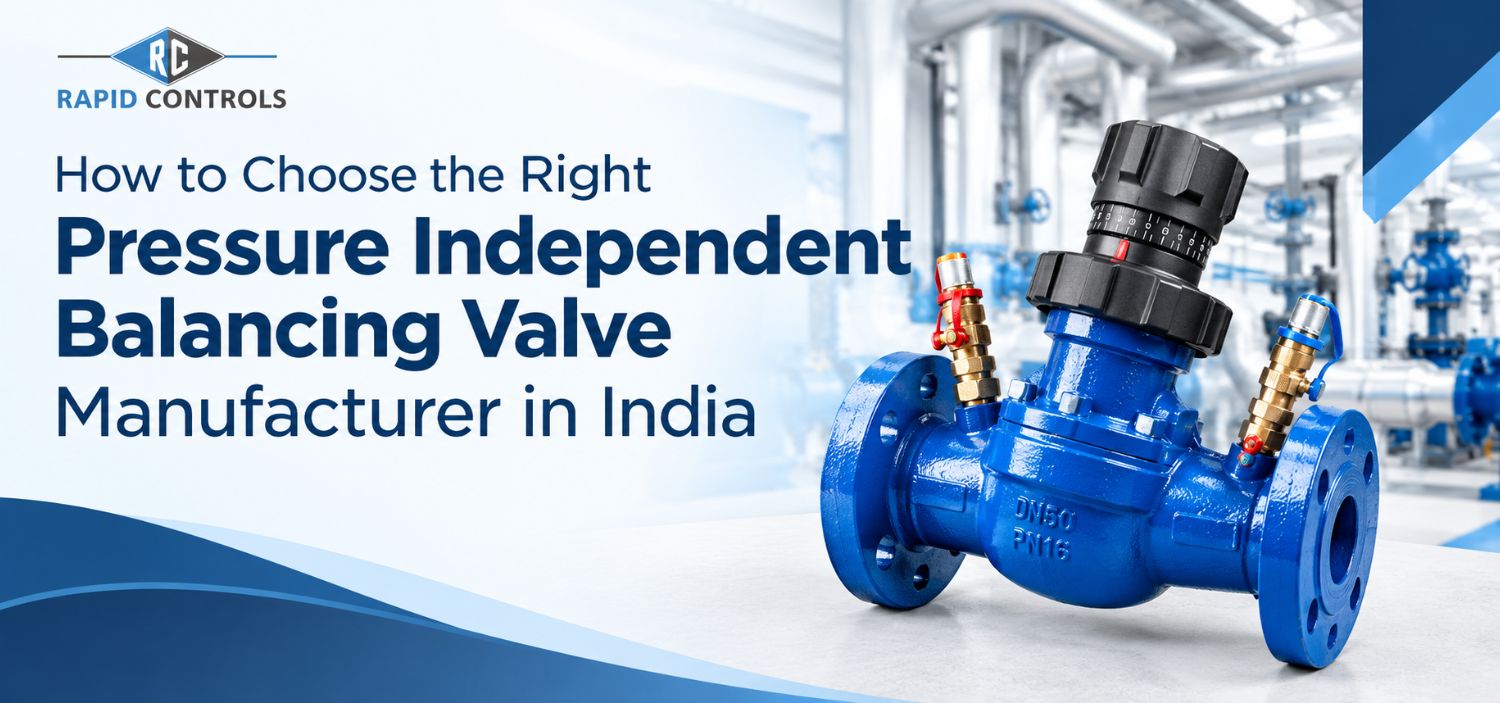
Modern HVAC systems are expected to deliver comfort, energy efficiency, and reliability at the same time. Achieving all three depends heavily on how well water flow is controlled across the system. This is where pressure independent balancing valves (PIBVs) come in. Choosing the right pressure independent balancing valve manufacturer in India is just as important as choosing the right valve, because quality, accuracy, and after-sales support directly affect long-term system performance. This guide explains what PIBVs are, how they work, where they are used, and how to pick a dependable partner.
What Is a Pressure Independent Balancing Valve?
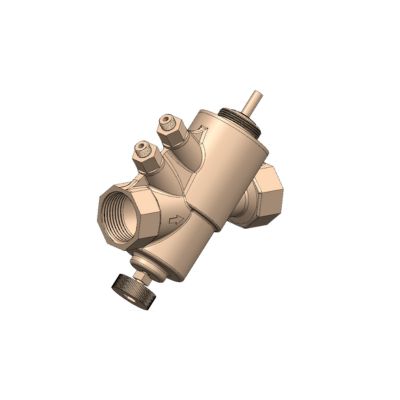
A pressure independent balancing valve is a flow control device that maintains a constant, preset flow rate through a terminal unit, such as a fan coil unit (FCU), air handling unit (AHU), or chiller, regardless of pressure fluctuations in the piping network. It combines a differential pressure controller and a control valve in a single body, so there is no need to install separate balancing and control components.
You may also see this product called a pressure independent control valve (PICV). Both terms are widely used in the industry, and a trusted pressure independent control valve manufacturer will typically offer both balancing and modulating versions to suit different system designs.
In traditional hydronic systems, a load change at one terminal unit alters pressure across the whole network, affecting flow in other units. A PIBV removes this problem by automatically compensating for those changes, ensuring that every unit receives exactly the water it needs.
How Does a Pressure Independent Balancing Valve Work?
A PIBV works on a simple principle: it keeps the pressure drop across its control portion constant, which in turn keeps the flow rate stable.
Inside the valve, a differential pressure regulator (usually a spring-loaded diaphragm or cartridge) continuously senses system pressure changes. When the upstream pressure rises, the regulator closes slightly to hold flow steady. When pressure drops, it opens to maintain the same flow rate. Meanwhile, the control portion of the valve, operated manually or by an actuator, adjusts the flow setpoint according to the building’s cooling or heating demand.
The result is accurate flow at all times, within the valve’s rated differential pressure range. Commissioning becomes easier too, since the required flow is simply set on the valve and does not need to be rebalanced when the system changes.
Key Benefits of Pressure Independent Balancing Valves in HVAC Systems
Accurate flow control: Each terminal unit receives the designed flow, preventing overflows in some zones and starvation in others.
Improved energy efficiency: Stable flow reduces pump energy consumption and prevents the chiller from operating at low delta-T, which is a common cause of wasted energy.
Simplified commissioning: Because the valve is self-balancing, there is no need for complex proportional balancing procedures. This saves time, labour, and project cost.
Better comfort and temperature control: Consistent flow enables stable room temperatures, even when partial loads change.
Reduced valve hunting and noise: Pressure fluctuations are absorbed by the valve, resulting in smoother, quieter operation.
Lower lifecycle costs: Fewer components, faster installation, and optimised pumping all contribute to long-term savings.
Uses of Pressure Independent Balancing Valves in Commercial and Industrial Buildings
PIBVs and PICVs are widely used wherever precise hydronic balancing is needed. Typical applications include:
- Commercial offices and IT parks: Large chilled water systems with numerous FCUs and AHUs benefit from automatic balancing.
- Hospitals: Critical areas such as operation theatres and wards require stable temperatures and dependable performance.
- Hotels and hospitality: Guest comfort and quiet operation are top priorities.
- Shopping malls and airports: Variable loads across large areas demand responsive, efficient flow control.
- Data centres: Precision cooling relies on consistent chilled water flow.
- Industrial facilities and pharmaceutical plants: Process cooling and clean-room HVAC need tight control and reliability.
- District cooling systems: Maintaining high delta-T across extensive networks improves overall plant efficiency.
How to Select the Best Pressure Independent Balancing Valve Manufacturer in India
With many suppliers in the market, selecting the right partner requires careful evaluation. Whether you are searching for a PICV valve manufacturer in India, a pressure independent balancing valve supplier, or a pressure independent control valve supplier, consider the following factors:
1. Product quality and materials
Look for valves made from high-grade brass, bronze, or ductile iron with durable internal components. Quality materials resist corrosion, scaling, and wear, ensuring a long service life.
2. Certifications and testing
A reliable manufacturer follows recognised standards and tests each valve for pressure rating, leakage, and flow accuracy. Ask for test reports and compliance documentation.
3. Range and customisation
Projects vary in size and flow requirements. A good manufacturer offers a wide range of sizes, flow settings, and actuator options, and can customise products to suit specific project needs.
4. Technical expertise and support
The best manufacturers provide selection assistance, design support, sizing calculations, and commissioning guidance. Strong technical backing helps avoid costly errors.
5. Proven track record
Check the manufacturer’s experience and reference projects in commercial, industrial, and institutional buildings. A solid portfolio signals consistent performance.
6. After-sales service and availability
Prompt delivery, spare parts, warranty coverage, and responsive service are essential, especially for large projects with tight schedules. A dependable pressure independent control valve supplier should maintain adequate stock and offer quick turnaround.
7. Competitive pricing with value
The lowest price is rarely the best deal. Evaluate total value, including performance, durability, and support, rather than upfront cost alone.
Why Rapid Controls Is a Trusted Choice
Rapid Controls is committed to delivering dependable flow control solutions for modern HVAC systems. As a pressure-independent balancing valve manufacturer and PICV valve manufacturer in India, Rapid Controls focuses on precision engineering, quality manufacturing, and customer-centric service. Its valves are designed to meet the demands of today’s commercial and industrial buildings. From technical guidance during design to support at commissioning, the team works closely with consultants, contractors, and facility managers to ensure every project achieves optimal performance and energy savings.
Conclusion
A pressure independent balancing valve is a smart investment for any HVAC system that values efficiency, comfort, and low maintenance. But the benefits depend on choosing the right manufacturer or supplier. By evaluating quality, certifications, customisation, technical support, and service, you can select a partner who delivers lasting value. With its engineering focus and customer-first approach, Rapid Controls is well placed to help you build HVAC systems that perform reliably for years to come.
Frequently Asked Questions (FAQs)
Q1. What is a pressure independent balancing valve?
A pressure independent balancing valve (PIBV) is a flow control device that maintains a constant, preset flow rate through a terminal unit, regardless of pressure changes in the piping system. It combines a differential pressure controller and a control valve in one body.
Q2. What is the difference between a PIBV and a PICV?
The terms are often used interchangeably. A pressure independent balancing valve and a pressure independent control valve (PICV) both maintain steady flow despite pressure fluctuations. PICVs usually include an actuator for modulating control, while PIBVs may be set manually or paired with an actuator.
Q3. Why should I choose a pressure independent balancing valve manufacturer in India?
A local manufacturer offers faster delivery, easier technical support, customisation options, quicker spare parts availability, and better after-sales service. This is especially valuable for large HVAC projects with tight timelines.
Q4. Where are PICVs and PIBVs commonly used?
They are widely used in commercial offices, IT parks, hospitals, hotels, shopping malls, airports, data centres, pharmaceutical plants, and district cooling systems.
Q5. How do pressure independent balancing valves save energy?
By delivering only the required flow to each terminal unit, they reduce pump energy consumption, prevent overflow, and help maintain a high delta-T at the chiller, improving overall system efficiency.