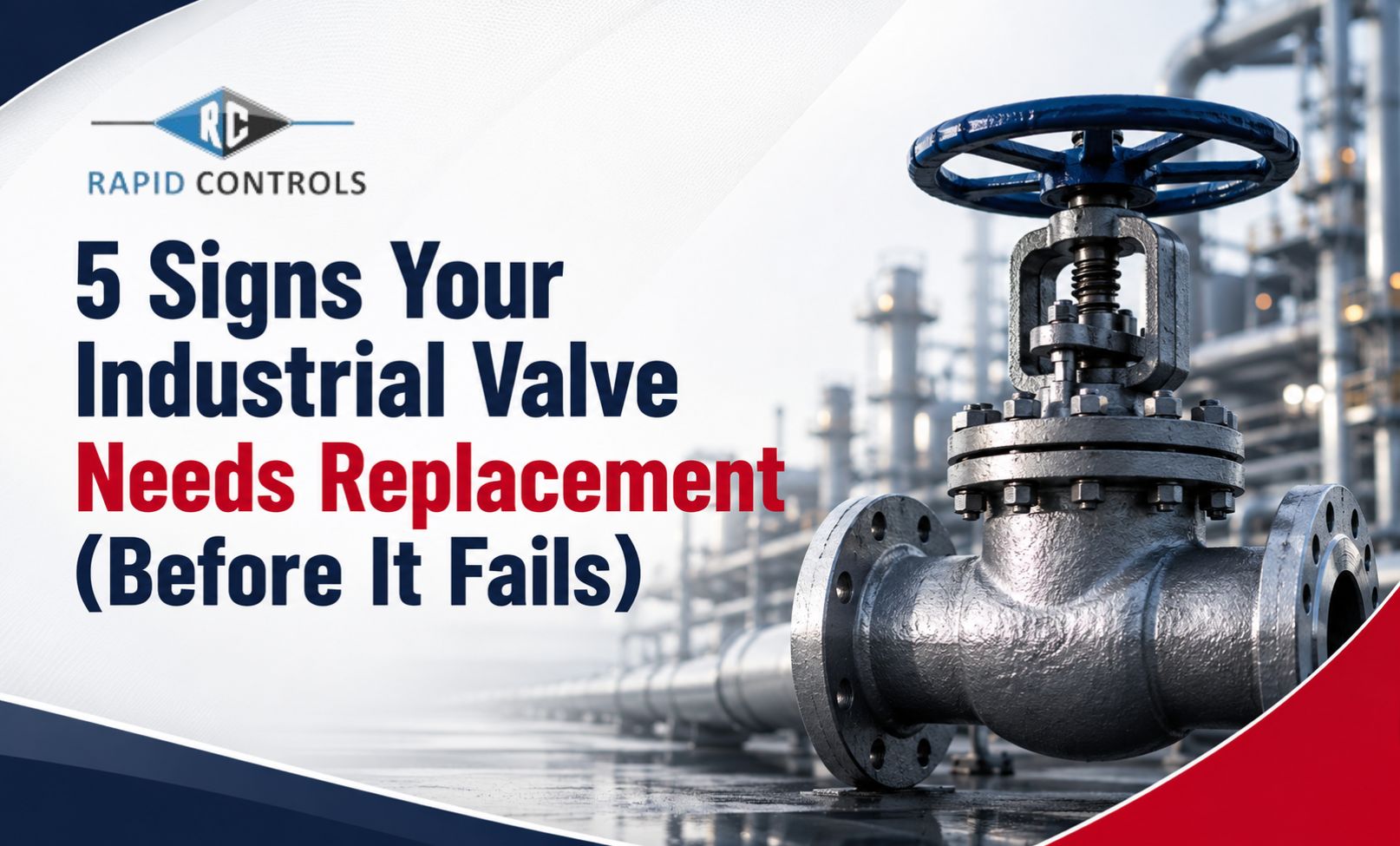
Industrial valves quietly control flow, pressure, and direction day after day — until, one day, they don’t. When a valve fails unexpectedly, production stops, pressure builds where it shouldn’t, and safety can be put at risk.
The good news: valves almost never fail without warning. Below are five common valve replacement signs to watch for, so you know when to replace a valve rather than risk running it to failure — and why partnering with an experienced industrial valve supplier matters when that time comes.
1. Visible Leaks Around the Valve Body or Stem
A leak is often the clearest sign that a valve’s internal components have worn out. Leaks around the stem usually point to degraded packing or seals, while leaks at the body may indicate cracking or corrosion.
Small leaks rarely stay small — they can lead to product loss, environmental hazards, and safety violations. If you notice moisture around a valve that wasn’t there before, have it inspected right away. Often, a timely valve leak repair — replacing worn packing, gaskets, or seals — can resolve the issue before a full replacement is needed.
2. Difficulty Operating the Valve
A healthy valve should open and close smoothly. If you need extra force to turn a handwheel, or a motorized valve responds slower or requires higher torque, something inside has likely changed — a bent stem, internal corrosion, mineral buildup, or a damaged seat.
This resistance is a mechanical stress signal. Forcing a struggling valve can snap components or damage the actuator, turning a simple maintenance issue into an expensive repair.
3. Inconsistent or Reduced Flow Control
A valve’s core job is regulating flow precisely. When a valve can no longer fully open or close, or flow rates fluctuate without any change in demand, it usually means internal parts — the seat, disc, or plug — are worn or damaged. This drift can quietly cause downstream problems long before it’s traced back to the valve.
If your team has noticed unexplained pressure drops or product quality issues, check valve performance rather than assuming the problem lies elsewhere.
4. Unusual Noise or Vibration
Valves that whistle, chatter, hammer, or vibrate during operation are trying to tell you something. These sounds often stem from cavitation, flashing, or turbulence caused by a worn seat or trapped debris. Left unaddressed, vibration accelerates wear and can damage surrounding piping. Cavitation deserves particular attention — repeated events can pit and erode metal surfaces, shortening a valve’s usable life far faster than normal wear.
5. Corrosion, Rust, or Physical Damage
Visual inspection still matters. External rust or discoloration often signals corrosion has already begun working on the inside, particularly in valves handling corrosive chemicals or exposed to humidity. Physical damage from impacts or over-torquing can also compromise structural integrity in ways that aren’t obvious until failure occurs. If a valve shows corrosion, it’s generally safer to plan for replacement, especially in high-pressure or hazardous applications.
A Few Valve Maintenance Tips
A few consistent valve maintenance tips make these warning signs much easier to catch early:
- Listen and look during every walkthrough for noise, vibration, or moisture.
- Exercise idle valves periodically to prevent sticking or seizing.
- Track torque and response time to catch gradual internal wear.
- Keep a maintenance log per valve to spot patterns over time.
- Use quality parts from a knowledgeable industrial valve supplier for proper fit and longer life.
Why the Right Industrial Valve Supplier Matters
Catching these signs early is only half the equation — the other half is having a reliable source for parts and guidance. Not every failure calls for full replacement; sometimes a rebuild kit or seat and seal replacement restores performance.
This is where Rapid Controls comes in. Founded in 1973 and based in New Delhi, Rapid Controls Pvt. Ltd. has spent over four decades as a trusted industrial valve supplier to the HVAC-R, plumbing, fire fighting, oil & gas, and pharma industries. Whether you need a dependable ball valve supplier for tight shutoff applications or a butterfly valve supplier for large-diameter, space-constrained systems, Rapid Controls carries the range and expertise to match the right valve to the job — including control valves and flow switches for demanding conditions.
Conclusion
Industrial valves rarely fail without warning. Leaks, stiff operation, inconsistent flow, noise, and visible corrosion are all valve replacement signs worth watching, and catching them early saves your operation from costly downtime and safety risks. Regular inspection and a proactive maintenance mindset go a long way toward extending valve life.
When it’s time to repair or replace a valve, working with a knowledgeable industrial valve supplier like Rapid Controls ensures you get the right component and the right support to keep operations running smoothly. Browse our full range of valves or get in touch with our team today for an expert assessment before a small issue becomes a major shutdown.
Frequently Asked Questions
1. How long do industrial valves typically last?
It depends on the valve type, material, and application, but most well-maintained industrial valves last anywhere from 10 to 25 years. Valves in corrosive, high-pressure, or high-cycle applications tend to wear out faster and need closer monitoring.
2. Can a leaking valve be repaired, or does it always need replacement?
Not always. Many leaks — especially around the stem — can be fixed with a valve leak repair, such as replacing worn packing, gaskets, or seals. Full replacement is usually only needed when the valve body itself is cracked, corroded, or structurally compromised.
3. What’s the difference between a ball valve and a butterfly valve?
Ball valves use a rotating ball to control flow and are known for tight shutoff, making them ideal for on/off applications. Butterfly valves use a rotating disc and are typically more compact and cost-effective for larger pipe diameters. A trusted ball valve supplier or butterfly valve supplier can help you determine which fits your specific pressure, size, and flow requirements.
4. How often should industrial valves be inspected?
For most facilities, a visual and functional inspection every 3 to 6 months is a good baseline, with more frequent checks for valves in critical or high-cycle service. Following basic valve maintenance tips — like exercising idle valves and logging inspections — makes it much easier to catch issues between scheduled checks.
5. What happens if a worn valve isn’t replaced in time?
Ignoring valve replacement signs can lead to unplanned downtime, product loss, pressure system damage, and safety hazards. In pressurized or hazardous-media systems, a failed valve can also pose serious risks to personnel and equipment.
6. How do I choose the right industrial valve supplier?
Look for a supplier with proven manufacturing experience, a broad product range, and technical support beyond the sale. Rapid Controls, for example, has supplied valves to the HVAC-R, plumbing, fire fighting, oil & gas, and pharma industries since 1973, offering both standard and customized valve solutions.